Marketing rarely fails because businesses don’t try. It fails because decisions are made in isolation, without a clear plan to guide them.
One month it’s social media posts. The next month it’s paid ads. Then a website redesign.
Each decision feels logical on its own, yet the overall direction remains unclear.
For many business owners, marketing becomes a cycle of effort without progress. Money gets spent, time gets consumed, and teams stay busy.
Still, sales don’t grow at the pace expected. This happens when marketing actions are driven by urgency instead of strategy.
Without a plan, businesses react to problems rather than preventing them. They chase quick fixes, copy competitors, and switch tactics too often to see real impact.
Unplanned marketing also creates confusion inside the business. Teams struggle to align. Performance becomes difficult to measure.
Trust with customers weakens because messaging keeps changing. Over time, frustration builds, and marketing starts to feel expensive instead of valuable.
What Happens When Marketing Decisions Are Made Without a Plan
In this guide, we will explain what happens when Marketing decisions are made without a plan, why it limits business growth, and how a structured approach can restore clarity, control, and results.
Why Unplanned Marketing Feels Busy but Delivers Little
Unplanned marketing creates movement without progress. Teams post content, run ads, redesign pages, and try new tools.
From the outside, it looks productive. Inside the business, however, results remain unclear.
This happens because effort is not connected to outcomes. Without a plan, marketing actions don’t support a clear goal.
One activity does not build on the previous one. Each task stands alone. As a result, energy spreads thin and momentum never builds.
Busy marketing often focuses on visibility instead of impact. Businesses chase reach, impressions, and engagement without understanding how those actions lead to revenue.
When results don’t improve, the instinct is to do more, not to step back and rethink direction.
Over time, this creates frustration. Teams work harder but feel stuck. Business owners lose confidence in marketing. The real issue is not lack of effort. It is lack of structure.
Budgets Get Spent Without Learning Anything
When marketing decisions are made without a plan, money gets spent without clarity. Ads are launched without clear objectives.
Tools are purchased without knowing how they fit into the system. Freelancers are hired without defined responsibilities.
The biggest loss is not money. It is learning. Without goals, benchmarks, and timelines, businesses cannot tell what worked and why. Campaigns end without insight. Budgets reset without improvement.
Unplanned spending turns marketing into a cost instead of an investment. Each expense feels risky because it does not produce understanding.
Over time, this leads to hesitation. Business owners become reluctant to invest again, even when opportunities exist.
A plan does not reduce spending. It ensures that every expense produces feedback. Learning is what turns marketing from guessing into progress.
Teams Chase Tactics Instead of Outcomes
Without a plan, teams focus on tasks instead of results. Posting schedules, creatives, hashtags, keywords, and formats take center stage.
Outcomes like conversions, qualified leads, or sales alignment remain secondary.
Tactics feel safe because they are visible. Strategy feels abstract because it requires thinking before acting. When pressure increases, teams default to doing instead of planning.
This creates a cycle where marketing becomes reactive. Decisions respond to trends, competitor activity, or short-term performance swings. Long-term goals fade into the background.
When outcomes are unclear, accountability weakens. Teams don’t know what success looks like. Feedback becomes subjective. This eventually slows growth and lowers morale.
Messaging Loses Direction and Trust Breaks
Consistent messaging requires intention. Without a plan, messages change frequently. One week focuses on price. The next highlights quality. Then speed. Then innovation.
Customers notice this inconsistency. It creates confusion about what the business actually stands for. Trust weakens when messaging feels unstable.
Strong brands repeat clear ideas over time. That repetition builds familiarity. Familiarity builds trust. Unplanned marketing breaks this cycle.
When messaging lacks direction, businesses struggle to position themselves.
They speak to everyone and connect with no one. A plan ensures that every message reinforces the same core value.
Leads Increase but Sales Don’t
One of the most common outcomes of unplanned marketing is lead growth without revenue growth. Traffic increases. Forms fill up. Messages arrive. Sales remain flat.
This happens because marketing and sales are disconnected. Ads attract the wrong audience. Landing pages don’t match intent. Offers don’t align with readiness.
Without a plan, there is no defined journey. Leads enter the system without guidance. Sales teams struggle to convert because expectations are unclear.
A marketing plan connects attention to action. It ensures that leads arrive informed, qualified, and prepared. Without it, volume increases but value does not.
Performance Becomes Impossible to Measure
Measurement depends on clarity. When goals are undefined, metrics lose meaning. Businesses track clicks, likes, and impressions but cannot connect them to outcomes.
Without a plan, there is no agreement on what success looks like. Teams report numbers without insight. Decisions rely on opinions instead of evidence.
This creates confusion at the leadership level. Marketing discussions become emotional. Budgets get adjusted based on frustration rather than data.
A plan defines what matters. It sets priorities. It turns data into direction instead of noise.
Marketing Fatigue Sets In Early
Unplanned marketing exhausts people. Constant changes drain energy. New ideas arrive before old ones mature. Nothing feels complete.
Teams feel pressure to deliver without clarity. Business owners feel disappointed without knowing why. Burnout appears early because effort feels wasted.
Marketing fatigue is not about workload. It is about uncertainty. When people don’t see progress, motivation fades.
A plan reduces fatigue by creating rhythm. It gives teams confidence that effort compounds over time. That confidence sustains momentum.
Businesses Copy Competitors Instead of Building Identity
When direction is missing, comparison fills the gap. Businesses copy competitor ads, content styles, offers, and messaging.
This approach feels efficient, but it rarely works. Competitors operate under different conditions. Different audiences. Different budgets. Different positioning.
Copying replaces thinking. It removes the need to define identity. Over time, businesses blend into the market instead of standing out.
A plan forces businesses to define who they are and why they exist. That clarity protects them from distraction.
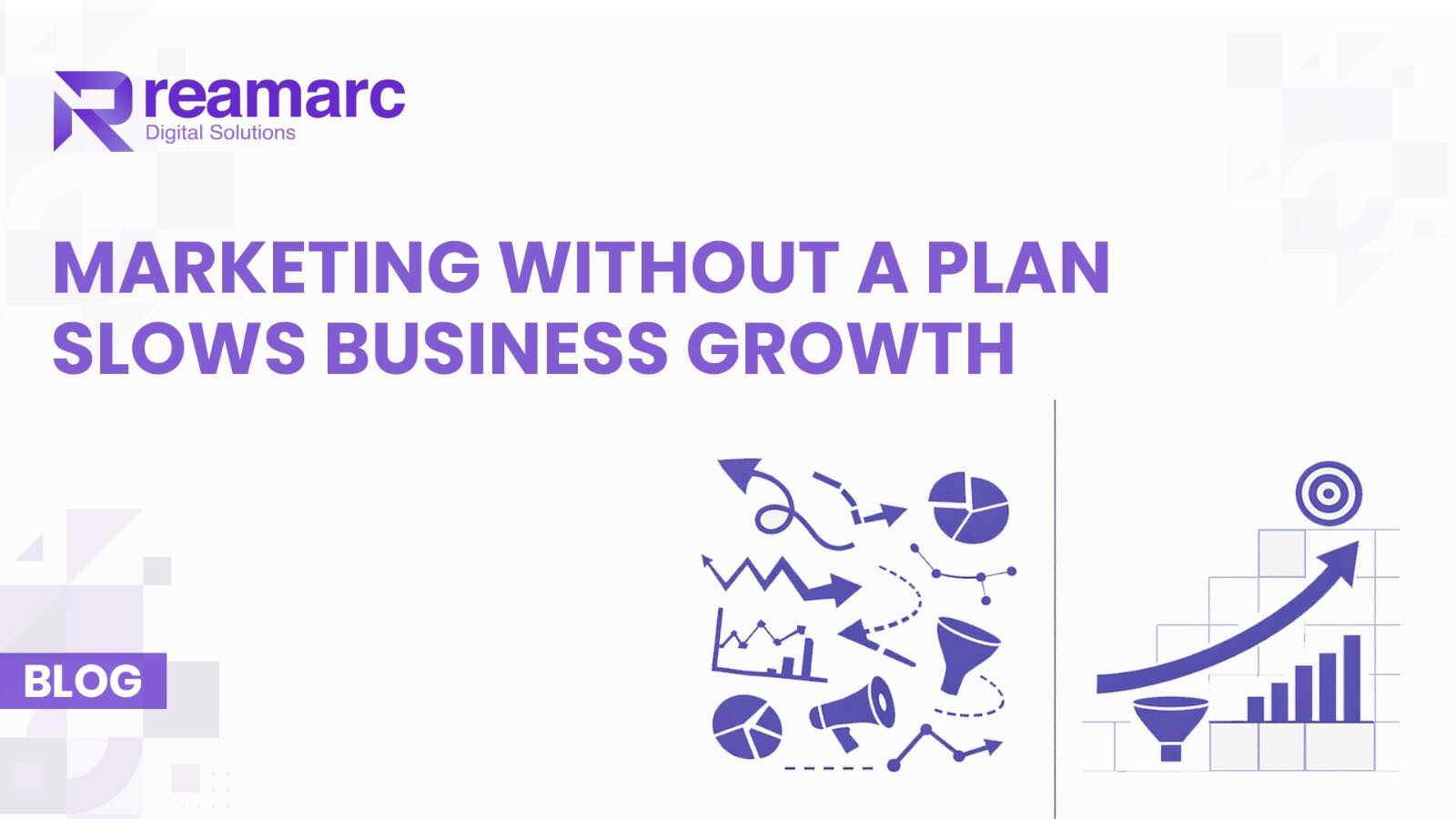
What Marketing Without a Plan Usually Looks Like
Marketing without a plan follows a familiar pattern:
- Random campaigns
- Inconsistent messaging
- Scattered channels
- Unclear metrics
- Frequent direction changes
Execution happens. Results don’t compound.
With a plan, marketing becomes focused:
- Clear objectives
- Consistent messaging
- Defined channels
- Measurable outcomes
- Long-term improvement
The difference is not talent. It is direction.
Why This Happens to Smart Business Owners
This problem does not come from lack of intelligence. It comes from pressure.
Business owners face urgent decisions. Sales slow down. Competition increases. Planning feels slow when action feels necessary.
Marketing also appears simple from the outside. Tools are accessible. Platforms are easy to use. This creates the illusion that strategy can be skipped.
In reality, coordination is harder than execution. Without structure, even smart decisions fail to connect.
How a Simple Marketing Plan Changes Outcomes
A marketing plan does not need to be complex. It needs to be clear.
A simple plan defines:
- Target audience
- Core problem
- Desired action
- Supporting channels
- Success metrics
This clarity aligns effort. Teams move in the same direction. Decisions become easier. Trade-offs become obvious.
Planning turns marketing into a system. Systems reduce waste. They improve learning. They create stability.
From Reaction to Direction: The Real Shift
The biggest benefit of planning is not better campaigns. It is better thinking.
Marketing decisions stop reacting to pressure. They respond to purpose. Conversations become calmer. Adjustments become intentional.
Growth becomes repeatable instead of random. Marketing shifts from stress to strategy.
Marketing without a plan is not neutral. It actively limits growth. Direction changes that.
Conclusion
Marketing problems rarely start with bad intentions. They start when decisions are made quickly, separately, and without a shared direction.
Over time, this creates scattered efforts, wasted budgets, and teams that work hard without seeing meaningful progress.
The business stays active, yet growth remains inconsistent.
A lack of planning turns marketing into a series of reactions instead of a structured system. Messaging changes too often.
Performance becomes difficult to judge. Trust with customers weakens. Internally, frustration builds because no one is certain what should be improved or maintained.
These issues are not caused by weak tools or low effort. They are caused by missing clarity.
A clear marketing plan does not slow businesses down. It gives them control. It helps teams understand priorities, measure what matters, and build momentum over time.
With direction in place, marketing stops feeling expensive and starts feeling purposeful.
The shift from random action to structured execution is what allows businesses to grow with confidence instead of constantly guessing.